
 EN
EN
 Build a stronger, more competitive product with our value.
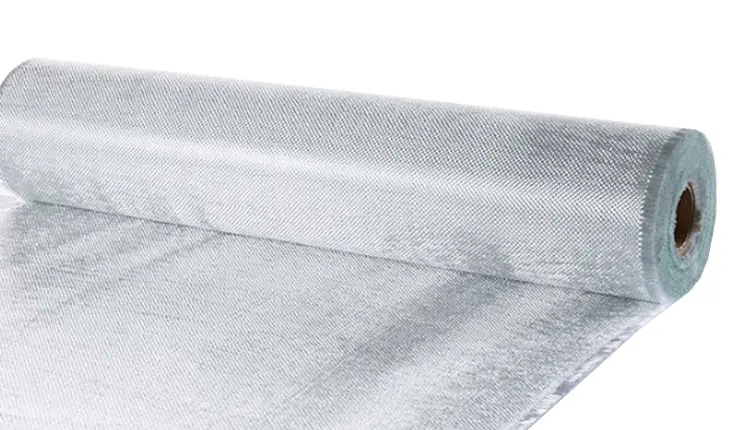
What Technical Heavy-Duty Performance Factors Woven Roving?
Woven roving's profile is constructed to meet the stressors for heavy-duty applications, the starting point being its strength-to-weight ratio. When compared to materials like steel, woven roving's interlaced strands won't add to the weight, but will provide significant increases to the load-bearing capacities. With applications such as industrial tanks, bridge parts, and truck bodies, the strategic reduction to the weight in the FRP products is a difference maker.
Long-lasting FRP products display another key technical advantage: corrosion resistance. Woven roving is made out of fiberglass that doesn't corrosively degrade, ensuring that the FRP products retain their structural integrity over time. Extreme environments that display elements such as chemicals, moisture, and rising and falling temperatures will not impact the structural components. Furthermore, the superb electrical insulation of woven roving makes it a safe option for products used in all ranges of electrical and electronic applications, including the heavy-duty environment.
Also, the dimensional stability is positively influenced as the consistent fiber alignment in woven roving helps avoid warping and structural deformation. This is stability that all FRP products need to retain their shape and performance. This is critical as these components are designed to endure years of continuous loads and harsh conditions, and the heavy-duty applications are often the most demanding.
Testing Woven Roving'S Reliability in the Real World
It's not just theoretical that woven roving is ideal for heavy-duty FRP products, it has been validated in a wide range of real-life applications in different sectors. For example, in the infrastructure sector, woven roving is an actual materials of choice for reinforcement of bridge decks and various concrete structures. One of the most consistent buyers in this sector has had woven roving for a long time, and, for the most part, they attribute consistent woven roving material to the FRP components they produce being able to maintain safe performance under heavy traffic loading and increased exposure to the environmental elements.
Cost Efficiency and Quality
Manufacturers are constantly faced with the challenge of striking the right balance between performance and cost. The challenge is made more pronounced in heavy-duty industries where almost always the quality of materials used is a major factor in determining the safety of the products made and the industries reputation. Woven roving solves the challenge to an extent as it priced almost competitively to other products in the industry. It is also less likely to undersurface than other products in the industry. Other than the high-strength reinforcing materials that are woven roving products, there are no competitors that offer the same mechanical properties owing to the cost of the product.
Woven also roving is easy to integrate with other materials. This further reduces the production cycle, saves time and minimizes the waste incurred during production. The quality of the products used is more consistent than with other materials hence there are less production errors and less time is spent correcting mistakes in the production process. The performance and cost of the materials used to produce woven roving provide a competitive edge and assists many customers in being more profitable than their competitors.
Keeping Up With Industry Trends and Standards
With modern manufacturing and technology transforming the manufacturing industry and with infrastructure and transportation being modernized and manufactured with sustainability in mind, the need for high durability and high performance FRP materials has increased. Woven roving is reinforcing the manufacturing of products which are light, energy efficeeint and durable. These attributes are critical as the majority of manufacturering and production industries are working towards reducing their environmental impact and improving their operational efficiency.
Events such as the China International Composites Expo demonstrate that the demand for Woven Roving materials that fulfill the requirements of heavy-duty applications is increasing. It also exemplifies the attributes of woven roving which provide strength, durability, versatility and deliver premium attributes and standards in the materials industry. More woven roving materials also provide the peace of mind which stems from the non-toxicity and corrosion resistant materials which aids in compliance with the manufacture standards.
Customer Centric Benefits
Woven roving, beyond the technical, the cost saving and operational productivity benefits, has the attributes of customer centric benefits. It has operational attributes that improve the manufacturing experience of the customer. The construction/ manufacturing industry has applauded woven roving for its versatility as it is compatible with many production/ manufacturing methods. The produced materials of woven roving can easily be adapted to any manufacturing process.
Professional and technical support—from help choosing material grades to assisting manufacturers in optimizing the woven roving to their unique applications—has received customer praise. Guidance avoids misalignment between the material and the project, reducing risks and increasing project performance. Support suppliers received praise because the professional assistance helped customers select the appropriate woven roving grade for their heavy-duty projects, resulting in improved end products and increased customer satisfaction.
Conclusion
The combination of technical and real-world proven reliability, cost-effectiveness, and alignment with industry trends woven roving makes it the ideal material choice for heavy-duty products in the FRP industry. The woven roving strength-to-weight ratio, corrosion resistance, and dimensional stability solve the most important challenges of heavy-duty applications. The efficiency and profitability of the manufacturing process is supported by the coupled affordability and ease of use of the material. The woven roving positive customer feedback coupled with the global industry standards, further confirms the material as more than just a reinforcing factor. For manufacturers, woven roving is a strategic asset to produce heavy-duty FRP products that are competitive in the market. For businesses, woven roving is a trusted option.