
 EN
EN
 Build a stronger, more competitive product with our value.
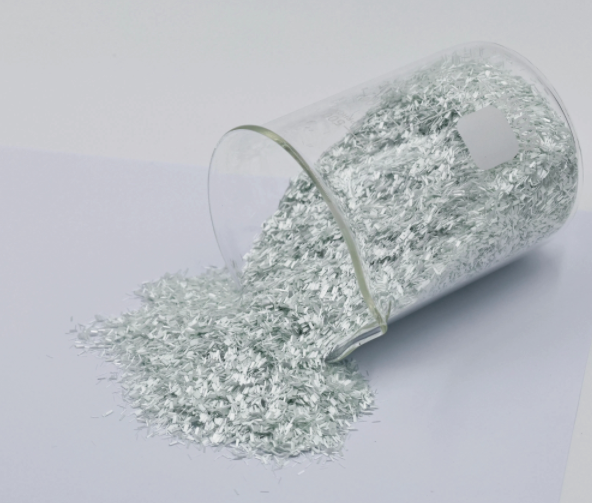
What is Reinforcement Uniformity in Moulding?
Reinforcement uniformity in moulding means the reinforcing materials like the fiberglass products used in several industries, are evenly distributed in the base material (like plastic) during the moulding process.
So, if there are fiberglass strands or other reinforcements not evenly spread in the moulding process, the product will be inconsistent, just like when you make a cake with chocolate chips and if the chips are bunched in one side the cake will be bready with a smooth, even texture, and other parts will be over chocolate chip and the cake even bready.
For example, in the making of fiberglass-reinforced plastic parts used in the transportation industries, for every section of the parts, proper uniformity means there is some amount of fiberglass in every section of the parts, and there is no over or lack of fiberglass in the other parts.
The Technical Problems of Poor Reinforcement Uniformity
Poor, uneven and unaligned distribution of glass fibre can result in issues such as dimensional instability. Reinforcement clustering, can cause uneven dimensional cooling of a moulding material. This leads to further problems such as warping of moulded parts. Even a simple moulded panel can become warped and twisted during progressive cooling to the point of scrappage. This type of dimensional failure can result in scrappage of a complete batch, resulting in further wasted time and money of production.
Poor reinforcement uniformity can also result in uneven reinforcement. In the chemical applications field, a glass fibre reinforced plastic (GFRP) tank that is poorly reinforced may have thin spots that do not have the same level of corrossion resistance. This can lead to leaking before the life span is up and ultimately cause a failure to occur. Repeated replacements can lead to safety hazards as well.
Why Consistent Reinforcment Improves Product Performance
Across the board the more uniform the reinforcement, the better the product performs, a fact backed by real-world experience. Aerospace is a good example: When making lightweight, high-strength, high-performance parts, fiberglass components that are uniformly reinforced can withstand extreme changes in pressure and temperature. An aerospace-part supplier once explained that optimizing uniformity in reinforcement resulted in a 20% increase in load-bearing capacity of the components. This is a great improvement in a safety-critical application.
Uniformity in building materials is equally important when it comes to the longevity of the product. Fiberglass panels with even reinforcement weather better, they don’t fade and they don’t degrade. This makes the building stay intact longer. It’s not just about appearance, it reduces maintenance cost for the property’s owners in the years to come.
Understanding The Business Benefits of Reinforcement Uniformity
Every business has various moving parts, each needing special attention and skill to align properly for the business to grow successfully. One of those parts is cost & resource management. Focusing on reinforcement uniformity saves a company money because a business will begin to produce a better, more uniform product. Because the product will have a consistent quality, they will have fewer defects and far less waste. One company was able to cut their scrap rate by 15% after emphasizing uniformity. That is potentially thousands of dollars saved on materials and labor every year.
Uniformity in product quality leads to increased customer satisfaction. Consistent quality guarantees a more reliable product, leading to increased customer trust and retention. A chemical company producing uniformly reinforced storage tanks was able to operate without returns or complaints for 2 years. Positive customer trust and retention leads to easier repeat business, and the referrals provide an avenue for growth.
Additional business value comes in the ability to serve new markets. Uniformity makes business more competitive for contracts in fields like aerospace and medicine where quality control is critical. Consistent and quality reinforcement opens the company to new customer bases and increased revenue.
Practical Tips to Achieve Reinforcement Uniformity
Get the uniformly achieved reinforcement with effective planning prior to execution. The first step is choosing the right materials. Fabrics of high quality (woven rovings or chopped strands) disperse more easily than others. In most cases, higher cost materials tend to yield more consistent results.
Along with low pressure over the molds, controlled injection pressure can result in better mixing. In a similar process, a technician with a lot of experience said that a slight reduction in the screw rotation speed during the melting phase results in better dispersion of the reinforcement, elastomeric or otherwise.
Most of the time, monitoring means that real time oversight sensors will help the person(s) in charge to assess the distribution of the reinforcement during certain stages of the process. In case a sensor captures a cluster, corrective moves can be done right in time to save a batch almost in its entirety. This data collection even helps to refine the process for achieving the uniform result, more and more over time.
Conclusion
Reinforcement uniformity in moulding is not simply an option, it is critical to the overall quality and dependability of products. Being technically flawless and growing the business is an understatement. Uniformity gives assurance in how well and how many times products should be supplied. In competitive market, it is more of an imperative than an extra.