
 EN
EN
 Build a stronger, more competitive product with our value.
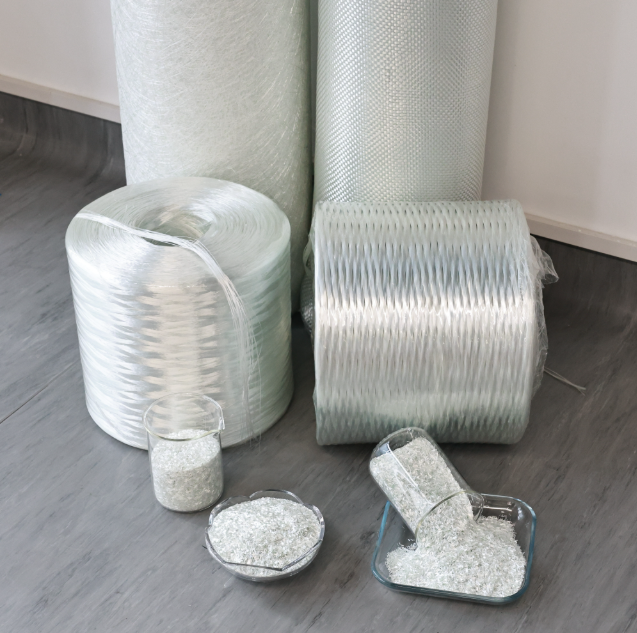
What Benefits Do Fiberglass Products Have for the Environment?
The raw materials and production processes used in fiberglass products provide an eco-friendly solution. The many positive attributes fiberglass possesses explains why the construction and manufacturing industries have used it for the last twenty years. Recently, as industries have sought \"greener\" materials and production processes, the sustainable benefits of fiberglass have come into focus. The positive attributes of fiberglass have made the use of fiberglass products an environmentally friendly alternative that has driven innovation and offered solutions throughout the entire product lifecycle. Recent industry shifts have also incorporated the benefits of recycling fiberglass products, as evidenced by the trends noted during the China International Composites Expo 2025.
Low Impact Production and Sustainable Material Composition
The environmental positivity of fiberglass starts with its basic constitutive materials. Fiberglass is primarily made from natural inorganic materials like quartz sand. These materials are non-petroleum, and hence, do not contribute to the depletion of fossil fuel resources. In the 2025 H1 Fiberglass Industry Report, it was noted that the most significant of the fiberglass industry consumers have made considerable reductions in the energy consumption of their production processes. Some of these producers have achieved ‘zero-carbon’ manufacturing bases and have almost completely eliminated carbon emissions during production, due to the use of ‘green’ or renewable sources of energy. The production of fiberglass does not contribute to the generation of ‘volatile organic compounds’ (VOCS) or ‘industrial wastewater’ like the production of metals or plastics. The energy required to manufacture fiberglass-reinforced composites is a very small fraction of that required for aluminum production. Due to these factors, the fiberglass industry has been able to provide products of reputable (long) guaranteed) quality for the international or global marketplace (which includes Europe and America) while maintaining compliant products with the environmental criteria of low carbon emissions (which includes the environmental import criteria of all imports).
Declined Carbon Footprint Throughout The Whole Lifecycle
Fiberglass offers an excellent strength-to-weight ratio, and this is an important factor that drives down emissions. For example, composites in transportation and aerospace industries reduce vehicle and aircraft weight by 15%. When considering the 15% weight reduction of vehicles, industry data shows a 100kg weight reduction equals a 3 to 5 ton decrease in carbon emissions over 300,000 km. For the wind energy industry, fiberglass is the core element of wind turbine blades. The production of fiberglass (when powered by renewable electricity) and the wind turbine blades themselves creates an emissions reduction cycle that reduces emissions by 400,000 tons annually per production location. There is increasing demand for specialty fiberglass and the production of this fiberglass is helping to lower emissions. Additionally, the elements of High-Frequency Communication and AI are propelling the necessity for specialty fiberglass and the production of this fiberglass are helping to lower emissions as well.
Long service life reduces waste
In most industries, fiberglass reduces waste due to its resistance to corrosion and weather. In chemical engineering, infrastructure and marine projects, fiberglass products outlast metal and plastic materials when it comes to service life and resistance to acid, alkali and salt sprays. Buyers of fiberglass products notice a great deal of quality stability, leading to less frequent replacement and maintenance of fiberglass components. This longevity reduces waste from short-lived components. In construction, fiberglass reinforced materials help achieve sustainability goals as they withstand weathering and building maintenance for decades.
The versatility of fiberglass as an electrical insulator and its structural design flexibility fosters greater resource efficiency in nearly all key industries, including electrical and electronic, energy-saving, and construction industries. In construction energy efficiency, fiberglass-reinforced composite windows have thermal conductivity 1/700 that of aluminum, resulting in a reduction of building energy use by 50% and diminishes the burden on heating and cooling power. In the electrical sector, fiberglass assists electrical devices in better insulating the electrical equipment, therefore, reducing the energy loss during operation and enhancing resource utilization. The China International Composites Expo 2025 will highlight the energy-saving properties of fiberglass and its versatility. Instead of using several traditional materials, a single high-performing fiberglass can be used which also lessens the necessity of virgin material sourcing and resource-intensive material processing.
The recycling technology that is coming into use with fiberglass is a good example of advanced recycling technology that avoids landfill use by creating end-of-life fiberglass products into reusable resources. Instead of going to landfills, fiberglass products can be processed to recover the fiberglass and repurpose it into electrical components, helmets, and many other products. Advanced processing of wind turbine blades has shown that over 85% of the glass fibers can be economically recovered and reused. Fiberglass producers have developed complete waste recycling systems by grinding fiberglass scrap products into raw materials that can be used as part of the frame and other components. The 2025 Fiberglass Industry Report projects that, by 2030, the physical recovery rate of fiberglass waste will reach 92%. This is estimated to have an annual potential of over 5 million tons of carbon. This means that fiberglass products have a closed-loop recycling and the industry has moved beyond the linear “production-use-disposal” industrial model and into true circular economic development.