
 EN
EN
 Build a stronger, more competitive product with our value.
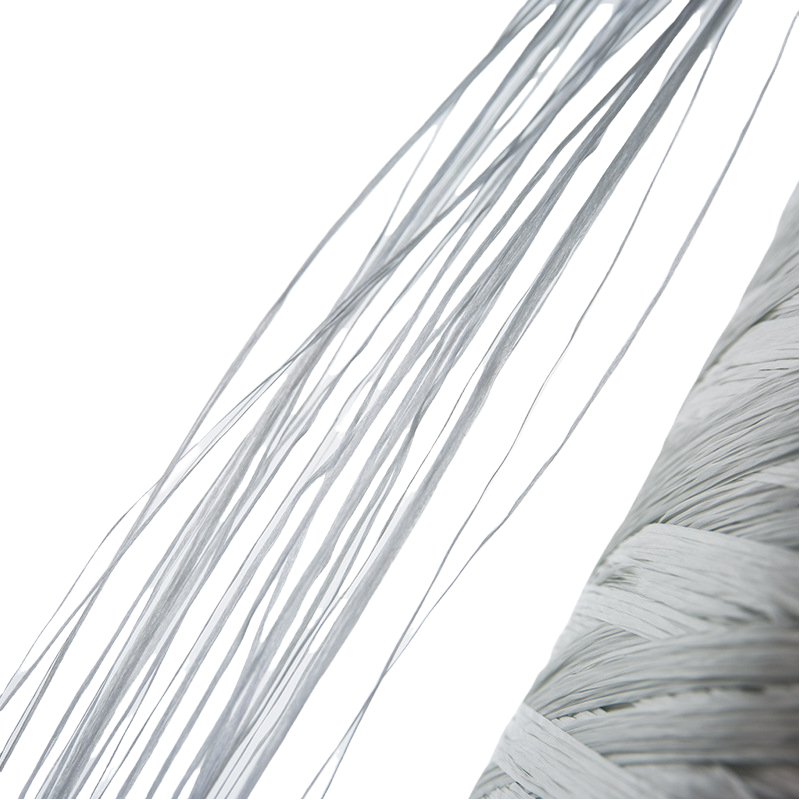
Tex and Roving Defined
Tex is a unit used to measure the linear density of a given fiber or yarn, meaning how heavy or light is a fiber or yarn within a given distance. The distance is typically 1000 meters, and the measurement unit is grams. Roving is an assortment of continuous filaments that act as a reinforcing medium in composite materials. In a straightforward sense, Low Tex Roving means that the fiber bundle is lighter in a given length. That translates to the yarn being finer. On the other hand, High Tex Roving means the fiber bundle is heavier in a length. That translates to the yarn being thicker. The difference in thickness leads to a host of other performance, application, and economic differences. Knowing the differences in fundamental principles of various materials is vital for making the right choice for an industry.
Core Technical Differences
Low and High Tex roving has numerous differences in terms of production and performance. About production processes, low Tex roving has to be more controlled in the fiber drawing and bundling processes to create a uniformly fine product. This usually tends to hinder production. On the other hand, High Tex roving doesn’t really need fine control, but consisitency in the fiber distribution of the packed bundles has to be ensured. In the aspect of performance indicators, flexiblity and permeability are the advantages of low Tex roving. Because of the fine fibers, low Tex roving can penetrate intricately designed molds and create even structure composites much better than High Tex. Nevertheless, High Tex roving performs better in terms of mechanical strength, especially in tensile strength and impact resistance. Data has shown that in practical uses, High Tex roving has a practical tensile strength of around 30 to 50 percent more than Low Tex roving of the same materials. Moreover, High Tex roving has more resistance to heat. High Tex glass fiber roving has a softening temperature of 845 degrees Celsius, while Low Tex products are a little lower. These differences either limits or expands the scope of manufacturing of either products.
Practical Experience and Case Studies
An example was shared by an engineer with over 15 years of experience in composite materials. One customer wanted to manufacture lightweight parts for the interiors of cars. High Tex Roving was chosen initially, but the final product was heavy, and the finish was rough. This was resolved by using a Low Tex Roving of Tex 300. The final components were lightweight with a vastly improved finish. Another example is production of blades for wind power. The main body of a blade is designed to take the brunt of the wind and is built to specified load conditions. High Tex Roving 4800 was used in the production process due to its strength. This enable the blades to operate in harsh environments for an extended duration. These real-life cases show that when each function of the product is matched with the appropriate Tex value, the need for rework is eliminated and production efficiency is improved.
Authority Support and Expert Opinions
Jushi states in its product technical manual, which can also be found online, that one of the most critical variables of the roving application scope is the Tex value. Along the same lines, the International Composite Materials Association (ICMA) notes in its 2025 industry report that the integral selection of Tex grade influences both the durability and economy of the composite. Experts agree that for the precision and lightweight requirements of end products, low Tex roving is the optimum solution, while high Tex roving is indispensable for the structural components of the end products with high load-bearing capacity. Such research and views of the industry provide substantial support to the companies, assisting them in selecting materials, and minimizing operational risks.Commercial Value and Cost-Benefit Analysis
When considering the commercial sides of things, the trade-off between the Low Tex and High Tex Roving from the perspective of cost control and competitive standing in the market is crucial. As High Tex Roving is more cost-effective and efficient, it is better suited for mass production of structural components, thereby reducing the overall cost of production for the company. On the other hand, Low Tex Roving is more expensive and takes more time and money to produce, but on the positive side it helps companies manufacture premium end-precision items thereby overcoming segmentation to access the higher-end markets. For instance, in construction materials, High Tex Roving is more efficient in producing reinforcement materials while consuming less raw materials. In contrast, Low Tex Roving is used a lot in aerospace for premium light-weight components that have high added value and meet the strict weight criteria required in the industry.
Selection Guidelines within Different Industries
Because industries differ when it comes to the specific applications of the combination of roving and Tex value, the use of low and high Tex roving varies. For example, in the transportation industry, roving (low Tex) is used for auto parts and aircraft components, as it is lightweight and has good design flexibility which improves fuel efficiency and lowers energy consumption. In infrastructure and wind power, high Tex roving is used because of its superior mechanical strength, which improves the stability and service life of large structures like bridges and turbine blades. In the electrical/electronic industry, low Tex roving is used to manufacture insulators and components for electronic devices because of its electrical insulation and low permeability. In sports and leisure, low Tex roving is used to manufacture lightweight, high performance products like bicycle frames and fishing rods. Understanding specific industry requirements is key to optimizing the selection of materials.
Conclusion
To summarize, the disparity among low Tex and high Tex roving can be seen in the area of technical performance, practical applications, commercial worth, and adaption in the industry. In particular, the low Tex roving is recognized, due to its finesse, pliability, and accuracy, to be more applicable to high-end, lightweight, and high-precision required products. In contrast, high Tex roving is more applicable to structural parts and large-scale production owing to the strength, durability, and cost-effectiveness of high Tex roving. With the knowledge of these differences, and in conjunction with authoritative guidance, practical experience, and the characteristics of the industry, enterprises can select the appropriate Tex grade roving and optimize the performance of the product, manage costs, and improve competitive advantage in the market. In the ever-changing industry of composite materials, the key to sustainable development and greater value creation is rooted in the knowledge of the material properties.