
 EN
EN
 Build a stronger, more competitive product with our value.
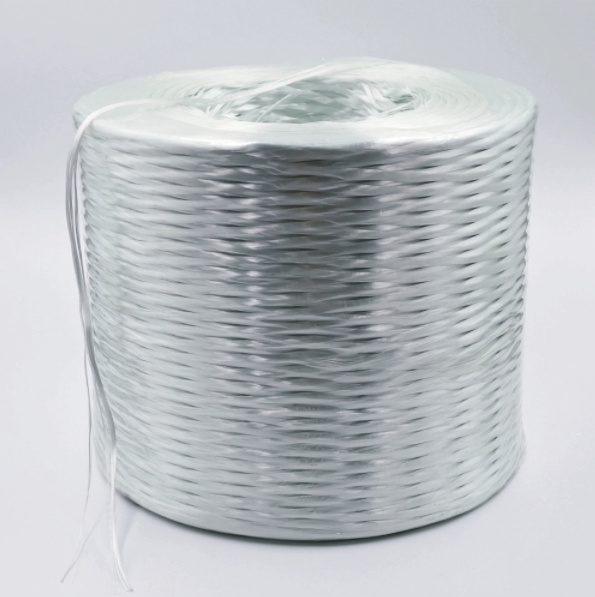
FRP moulding is the backbone of various industries ranging from aerospace to infrastructure due to the lightweight and durable components that can be manufactured. Among the key materials that drive the performance of FRP is fine single yarn. Having assisted numerous FRP process optimisations, we are confident that this specialized variant of fiberglass can improve the quality of the products as well as the processes in FRP moulding. Let's go through some of the primary benefits of fine single yarn and understand why it is a necessity in FRP moulding.
Superior Mechanical Strength and Uniformity
Fine single yarn is able to improve the performance of FRP components for it uniquely fibre structure. Unlike regular fiberglass yarns, the ultra-thin filaments of fine single yarn are able to fit in tighter spaces in a composite matrix. When these filaments are closely arranged within the matrix, they eliminate weak points, leading to slender, uniform and consistent tensile and flexural strength of the moulded parts.
At a conference with a manufacturer who deals with Fiber Reinforced Plastics (FRP) used in transport, I learned that using fine single yarn for the first time resulted in a 15% weight reduction for the FRP component, while still achieving all the necessary critical strength requirements. That further improved the fuel efficiency of the manufacturer’s transport products. This aligns with the reports of the China International Composites Expo 2025 that state fine filament fiberglass composites provide 20% to 30% improved flexural strength compared to other options. This is even more true for the aerospace sector, which is highly focused on strength to weight ratio. Every gram that can be saved on a component improves operational efficiency.
When it comes to Surface finish and Mould precision, the same applies. Firm single yarn helps the industry achieve flawless aesthetics in electric and electronic manufacturing, where there is no tolerance. Single yarn offers unmatched surface quality, even with the most difficult materials.
A customer who specializes in sensitive electronics housings discovered that fine single yarn extrusions eliminated the need for post-moulding polishing, resulting in a 25% reduction in production time, while providing a surface finish that seamlessly engages with sensitive internal parts. This advantage also improves longevity, as a smooth surface lessens moisture retention, which, in conjunction with fiberglass’s corrosion resistance, increases the product's longevity. In situations where fine single yarn is used, the difficult, intricate design of the mould ensures that the resulting product is of premium, consistent quality.
Improved Efficiency of Resin Impregnation
During FRP moulding, the step where the resin is introduced is extremely important, as the polymer has to fully impregnate the mould. Otherwise, there will be voids, delamination, and a loss of structural integrity. Fine single yarn eliminates these issues due to a very high surface area to volume ratio, allowing the resin to quickly and uniformly spread throughout the fibre matrix.
A customer from the chemical field had problems with resin voids in their FRP storage tanks, which had safety implications. After the adoption of fine-single yarn, their resin penetration improved by 30%, eliminating voids and increasing the tanks’ service life by over twenty percent. This effectiveness decreases the time spent on moulding and guarantees that every yarn is completely encapsulated, improving the composite's resistance to inclement chemicals and environmental conditions. The increasing need for specialty glass fabrics in AI and high-frequency communications strongly depends on the impregnation efficiency of fine single yarn. This has made fine single yarn a significant contributor to advancements in technology.
Cost-Effectiveness Through Material Optimization
Although fine single yarn may incur more costs than standard fiberglass, the savings incurred over time far outweigh the costs. Its even structure ensures that less fine single yarn is required to achieve a particular strength, thereby reducing raw material waste by 15%. In addition to this, shorter moulding cycles and less post-processing (like polishing, or repairs) result in reduced time which cuts down on labor and energy costs.
As reported by a building material manufacturer, although a 10% higher initial investment was required for fine single yarn, they were able to save 12% annually due to lower waste and maintenance costs. This is consistent with a greater portion of market feedback, prioritizing total lifecycle costs over initial costs—fine single yarn is able to reduce production costs by minimizing production inefficiencies and prolonging the life of the product.
Versatility Across Industrial Applications
The ability of fine single yarn to adapt to different FRP (Fiber-Reinforced Polymer) moulding processes and industries may be one of the most significant benefits of the product. It consistently performs as expected, from hand lay-up for infrastructure to pultrusion for sports equipment, and is adaptable to different processes.
An FRP kayak manufacturer in the sports leisure sector that switched to fine single yarn was able to improve the rigidity and impact resistance of the kayaks. The customers also praised the performance of the kayaks and the manufacturer was able to increase the sales by 20%. It is also used in the aerospace industry to manufacture lightweight interior components that satisfy stringent safety requirements. In energy-saving applications, fine single yarn’s thermal stability increases the efficiency of insulation systems. There is growing demand for high-performance composites in the infrastructure and renewable energy sectors to meet the needs of the fiberglass industry.