
 EN
EN
 Build a stronger, more competitive product with our value.
Vinyl coated FRP products are now used in manufacturing for aerospace, transportation, chemical engineering, and even construction as they are highly resistant to corrosion and flexible in terms of design and have a great strength to weight ratio. The performance of these products highly depend on the type of fiberglass reinforcement selected, which in order to make the right choice, one must have some of the specific technical know-how married with some practical industrial know-how. Having spent twenty years in the fiberglass industry, we have articulated the important things to consider when selecting reinforcements for vinyl coated FRP products, having a balanced technical fit, practical, and economic perspective.
Core Fiberglass Reinforcements for Vinyl Coated FRP
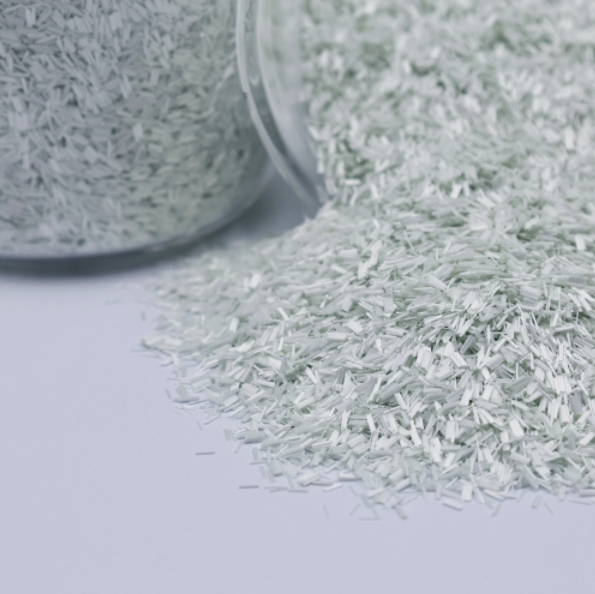
Fiberglass reinforcements for vinyl coated FRP are strongest when organized into three core categories. These categories are unrivaled vinyl resin system performance as bestsellers in worldwide markets. Woven Rovings are a tightly orthogonally woven material that provides the best flexural and tensile strength for load-supporting FRP designs. Chopped Strand Mat is a woven material with randomly oriented fibers that provides superior resin impregnation and stress distribution, making it ideal for corrosion resistant FRP linings and for FRP components with complicated geometries. Chopped Strands consists of short fiber pieces that integrate well with the vinyl resin for molded FRP components and improve their impact resistance and dimensional stability. These types of reinforcements are the basis of the vinyl coated FRP production and have characteristics that complement the mechanical and chemical requirements of vinyl resin systems, proven by the industry material standards and decades of use.
Vinyl Resin Systems and Their Compatible Materials
Fiberglass and vinyl resin systems are central to the development of high-quality FRP products. This bond interface determines the incidence of delamination and the consequent weakness and early failure of the product. Alkali-free fiberglass is typically the best option for the majority of vinyl resin formulations because the low alkali metal oxide content < 0.8% , leads to a trivial interaction with the vinyl resin’s ester groups. This leads to a sufficiently strong bond to silane coupling agents. For fiberglass of medium alkali content in acid-rich situations, the increased acid resistance of these fiberglass types renders them useful for vinyl coated FRP in chemical storage and transport. In chemical applications, the selection of compatible components that maintain more than 85% of tensile strength after 1000 hours of acid immersion of the sample is the best. For optimal performance of the composite, the type of fiberglass and the type of vinyl resin should be paired.
Application Specific Performance Prioritization
Choosing the best fiberglass reinforcement means matching the specifics of each application’s performance requirements with relevant material properties. This principle applies to effective FRP product design in all industries. In the chemical industry, for instance, a top concern is corrosion resistance, and for this reason, Chopped Strand Mat is the best reinforcement for vinyl coated FRP linings, because its high resin content forms a barrier that is dense and fully corrosion media impermeable. In aerospace and transport applications, Woven Rovings are the best option for FRP structural components, because they satisfy the requirement to provide the product with a tensile strength of over 250MPa, as specified by ASTM D3039, and also provide an overall weight reduction of the product by 30% as compared to alternative metallic products. In electrical and electronic applications, insulation of the electrical components is a necessity, and for this reason, the dielectric properties of vinyl coated FRP are preserved by the incorporation of Chopped Strands that are alkali-free. The FRP products used in the construction of infrastructure, like pipes and panels, are those that provide a composite of strength and durability e.g. the combination of Woven Rovings and Chopped Strand Mat provides a composite of load-bearing capacity and endurance against the elements.
Cost Efficiency and Consistency of Quality
Cost efficiency and consistency of quality are important for commercial success in the production of vinyl coated FRP. Although technical performance is always mandatory, repeat customers in global markets have proven that stable reinforcement quality reduces fiberglass quality related waste and rework costs, and improves overall FRP production yield by 15%, even more. Therefore, the ability to obtain consistent reinforcement quality at competitive prices is a key factor in the overall production cost, and in the case of FRP composites construction, the consistent quality of fiberglass at affordable prices is more cost-effective than fiberglass of lower quality at premium prices. Consistency of quality is achieved by strict control of the manufacturing process, from the selection of raw materials to the testing of the finished product, a process that has been improved for the past more than 20 years of practice in the fiberglass industry. The overall production costs will be lower, and the durability of vinyl coated FRP in the field, so that reliability will be better than to take warranty claims.
Best Practices for Selecting Fiberglass Reinforcements for Vinyl Coated FRP
To simplify effective fiberglass reinforcement for vinyl coated FRP, a three-step process combining technical analysis and practical validation is helpful. The first step is to identify the application requirements, be it corrosion resistance, strength, lightweight, electrical insulation, and also identify any mandatory industry requirements the FRP product must meet. The second step is to compare the requirements to the three core fiberglass reinforcements, factoring in resin compatibility and the particular production method, such as hand lay-up or pultrusion. The last step involves validation testing to determine the performance of the chosen reinforcement and vinyl resin in terms of adhesive strength, corrosion resistance, and mechanical properties. This process can be facilitated by technical assistance from fiberglass suppliers. Valuable FRP manufacturers have access to this service, which enables fiberglass suppliers to optimize their selection based on the requirements of a specific production process.
To wrap up, the choice of fiberglass reinforcements for vinyl coated FRP is very important
It will affect the technical attributes, and the commercial applicability. Finding a fit between all four of these pillars successful selection is crucial: The first pillar, is that there is material compatibility. The second pillar, is that there are sufficiently defined needs of the application. The third pillar, is that there is cost effectiveness. The last pillar and fourth pillar, is that there is uniformity. The right reinforcement selection, of the eight available options for vinyl coated FRP will help to meet the standards and strengthen the competitiveness of your vinyl coated FRP products in the global market. Practical and collaborative work will help the fiberglass suppliers to meet the standards and competitiveness of the vinyl coated fiberglass reinforced polyester (FRP) products on the global market. Along with the solid fiberglass supplier, the information provided in this article will help customers realize the commercial value of the fiberglass reinforced polyester (FRP) products that are coated with vinyl.
Table of Contents
- Core Fiberglass Reinforcements for Vinyl Coated FRP
- Vinyl Resin Systems and Their Compatible Materials
- Application Specific Performance Prioritization
- Cost Efficiency and Consistency of Quality
- Best Practices for Selecting Fiberglass Reinforcements for Vinyl Coated FRP
- To wrap up, the choice of fiberglass reinforcements for vinyl coated FRP is very important