 Build a stronger, more competitive product with our value.
Build a stronger, more competitive product with our value.
Build a stronger, more competitive product with our value.
Build a stronger, more competitive product with our value.
Build a stronger, more competitive product with our value.
Build a stronger, more competitive product with our value.
Build a stronger, more competitive product with our value.
Build a stronger, more competitive product with our value.
Build a stronger, more competitive product with our value.
Build a stronger, more competitive product with our value.
Build a stronger, more competitive product with our value.
Build a stronger, more competitive product with our value.
Build a stronger, more competitive product with our value.
Build a stronger, more competitive product with our value.
Build a stronger, more competitive product with our value.
Build a stronger, more competitive product with our value.
Build a stronger, more competitive product with our value.
Build a stronger, more competitive product with our value.
Build a stronger, more competitive product with our value.

Due to their strength, lightweight structure, and corrosion resistance, FRP parts have become essential to an array of industries, including infrastructures, aerospace, and transport. Creating the final molded part, however, relies on the different stages of the molding operation, one of the most critical being the application of molding pressure. Molding pressure, in tandem with the application of the fiberglass and the resin, serves to eliminate and reduce internal defects in the molded part structure and create the anchored bonding of the resin with the fiberglass to form an internal structural density of the molded part. Without the proper molding pressure, there can be voids/deformation of structural material of the resin, internal voids, and poor bonding of the internal constituents. These detrimental characteristics reduce the internal mechanical performance of the final FRP parts. Understanding the impact of molding pressure on the internal mechanical strength of lightweight fiberglass molded parts is essential for manufacturers and leads to the ability to successfully balance internal mechanical performance and production methods of the final product for optimum results.
Adequate moulding pressure affects the quality of FRP parts positively in several ways. First of all, optimal pressure helps with the proper wetting of fiberglass materials by the resin. Fiberglass products need to be fully impregnated with resin in order to exhibit the product's structural strength. Proper pressure helps the resin to fill in every fiber bundle to saturate the bundle and avoid any dry spots cores that would weaken the part. Second, adequate pressure helps to remove all internal air bubbles and voids within the FRP part. Voids are critical failures in FRP parts and are a source of stress concentration that can easily fracture under load. Also, adequate pressure enhances the fiber volume fraction of the part. Improved fiber content would increase the load capacity of the product and give it added strength that would help resist wear. This quality advantage helps meet the strict requirement in several industries and increases the product's competitiveness in the market.
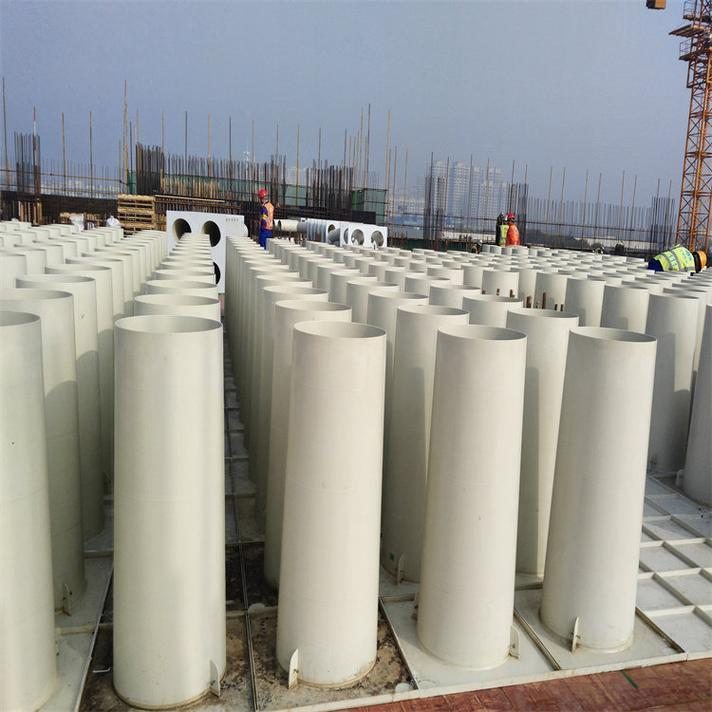
Every FRP part runs the risk of quality issues that reduce the overall strength of the part due to insufficient moulding pressure. One of these issues is incomplete drying of the resin which leaves behind dry fibers that cannot take loads. More gaps and voids are created within the FRP, which decreases the density of the part. These issues allow the defects within the product to flare up and lead to product damage, especially if the product is experiencing some sort of impact or tension. These kinds of FRP parts lead to ongoing maintenance and replacement, which can lead to an increase of costs for customers. The reputation of the brand and the trust the customers have is also impacted, which does not help the business in the long run.
The more even the balance of pressure in the system is, the more cost-effective production will be. If the unit pressure value is too high, the value of the products created will not increase, but the costs of production will. That is, more advanced equipment is required, more energy will be consumed, and the risks of the die being damaged and excess raw material being discarded will go up. If pressure is too low, product quality loss will mean there will be even more costs due to having to do the work over, throw products away, and so on. Therefore, the main cost and quality balance should be achieved to the other. This allows the manufacturer to produce and offer products at lower prices on the market and allows production to be done at a high cost with less competition. This is a cost and performance advantage clearly achieved in lower competition markets. This balance in values is the main win for the producer and the consumer.
Optimizing molding pressure parameters takes teamwork and understanding of the field. Manufacturers must understand the fiberglass molding process and the properties of the resins because the effect of pressure on the molding process makes a difference. Once they understand this, a series of tests and data analyses can help determine the optimal pressure parameters for a range of different products. Technical teams can cater to specific customer needs by making sure that molded fiberglass (FRP) parts meet the required strength parameters for a range of applications. Industries such as aerospace and transport place a higher demand on pressure control to ensure the final product is reliable. Technical expertise means the manufacturer has the right process setup to enhance product quality and customer satisfaction while improving their industry standing and brand image.
Research proves that with the right pressure control during production, FRP parts of great quality can be manufactured, which is of tangible benefit to the customers and the manufacturer as well. On the customer’s side, there is assurance of the quality of the product, which in turn will lessen the operational costs of having to maintain the product frequently and the product will last much longer. This will lead to them having increased operational efficiency with their own products. A good example is in infrastructure construction, where there are FRP parts that are of very high strength. They can withstand extreme weather, and as a result, there will be a lower rate of replacement and overall project costs will be lower. On the side of the manufacturer, being able to produce high quality products able to maintain lower price costs will earn them more market share and customer loyalty in the market. Furthermore, the high quality of the porducts will place the manufacturer in the high quality niche of the market which will result to increased profits. In the world market there products that are low cost and the quality is high and that stands to be very competent. This gives the manufacturer a competitive edge in the world market and paves the way to continuous growth in Sustainability in their business plans.

 EN
EN